
Zebra ZD200 series · Entry level
ZD230
Economical 4-inch desktop printer that adds network and wireless connectivity and faster printing at a low cost.
Prints labels at 152 mm/s. USB, Ethernet, Wi-Fi and Bluetooth connectivity options are available. It takes 300 m ribbons, extending the time between ribbon changes. An optional factory-installed peeler or cutter can be added, and the printer is ENERGY STAR qualified.
Variants
- ZD230D: Direct thermal; 220 x 176 x 151 mm (L x W x H), 1.1 kg.
- ZD230T: Thermal transfer; 300 m (1:4) or 74 m (1:1) ribbon; 267 x 197 x 191 mm, 1.7 kg.
- Print method
- Direct thermal (ZD230D) or thermal transfer (ZD230T)
- Resolution
- 203 dpi
- Print speed
- 152 mm/s (6 ips) or 102 mm/s (4 ips), programmable
- Print width
- Up to 104 mm; label length up to 991 mm
- Media
- Width 25.4–112 mm; thickness 0.08–0.19 mm; roll OD up to 127 mm; core 12.7 mm and 25.4 mm (38.1 mm with adapter)
- Ribbon
- 300 m (OD 66 mm, core 25.4 mm) or 74 m (OD 34 mm, core 12.7 mm); width 33.8–109.2 mm
- Connectivity
- Factory-installed options: USB + Ethernet; USB + Bluetooth 4.1; USB + 802.11ac Wi-Fi + Bluetooth 4.1
- Printer languages
- ZPL II, EPL 2, XML
- Memory
- 128 MB flash, 128 MB SDRAM
- Options
- Factory-installed peeler or cutter; no real-time clock
- Operating temperature
- 4.4 °C to 41 °C
- Dimensions and weight
- ZD230D: 220 x 176 x 151 mm (L x W x H), 1.1 kg; ZD230T: 267 x 197 x 191 mm, 1.7 kg
- Warranty
- At least 2 years (varies by region)
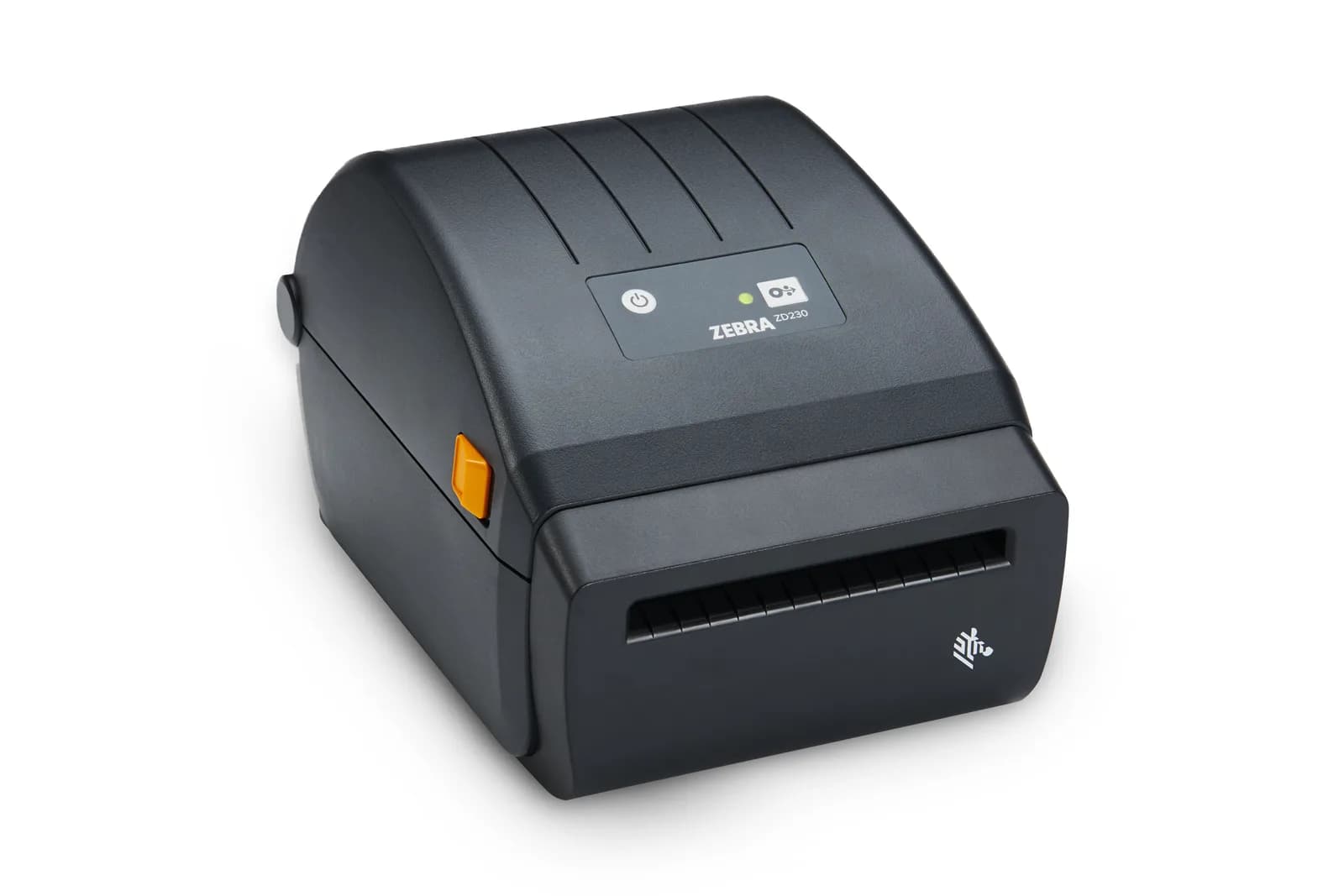
More views
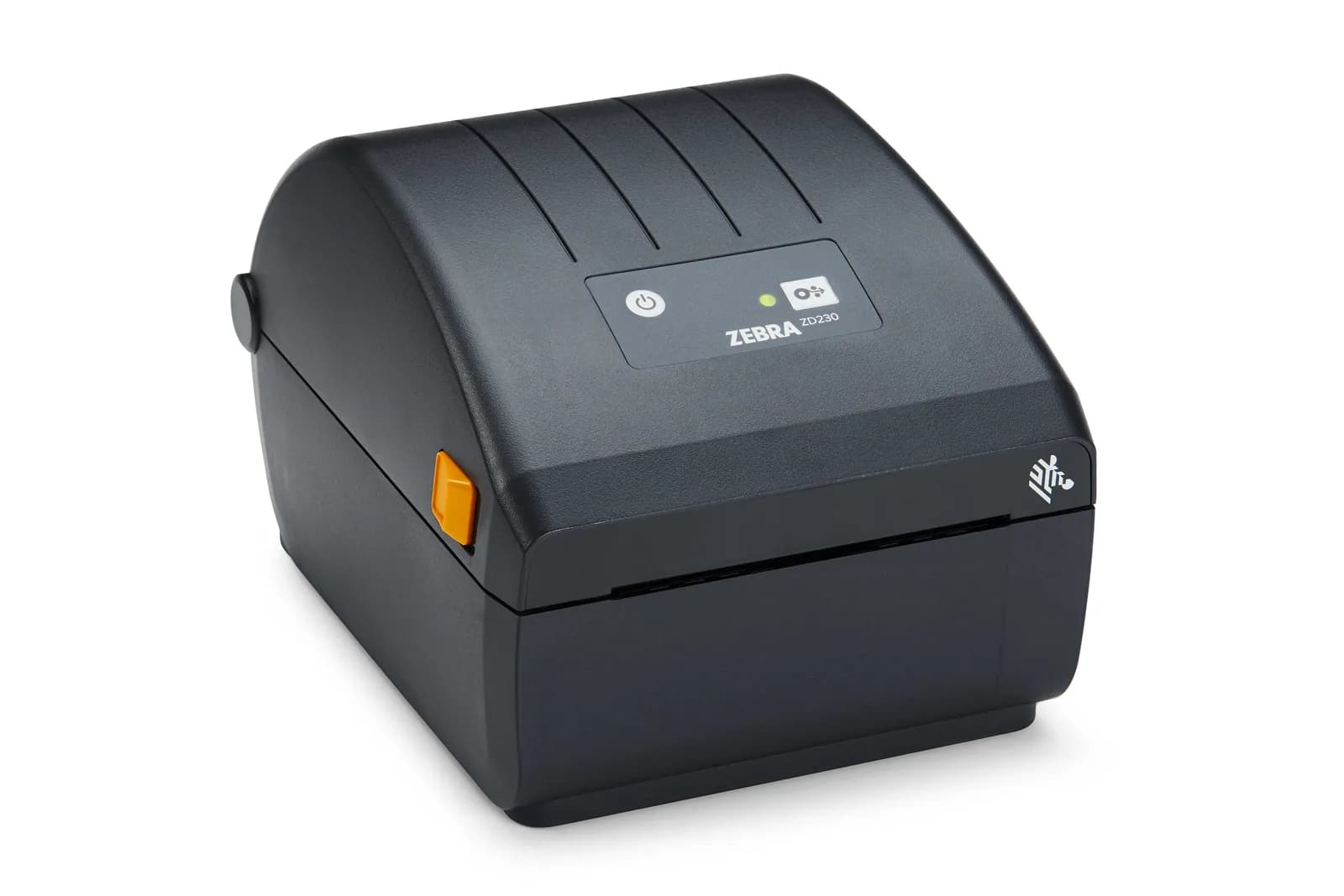
Pricing
For enterprise hardware, price depends on quantity, configuration and service package. Add it to your quote list and we'll price it the same business day.
Use cases
- Product labelling in light manufacturing
- Asset management and inventory labels
- Work-in-progress tracking
- Shipping labels and cross-docking
- Price tags and receipts in retail
- Patient identification in healthcare
Not the right fit for
- Small barcodes or text that need more than 203 dpi: the printer prints at 203 dpi only.
- Environments above 41 °C or below 4.4 °C: they fall outside the operating temperature range.
- Adding connectivity later in the field: connectivity options are factory-installed.
Common industries
Industrial Printers — other models
ZD220
Entry level4-inch desktop printer for businesses that want low cost and a basic feature set needing little training, without giving up Zebra quality.
DetailsZD230DA / ZD230TA
Entry levelCost-effective, USB-only 4-inch desktop printers with the features basic printing needs: DA is direct thermal, TA is thermal transfer.
DetailsZD611 / ZD621
PremiumPremium 2- and 4-inch desktop printers with premium features, top performance and strong security, easy to deploy and manage with Print DNA.
DetailsZD611 Healthcare
PremiumPremium 2-inch desktop printer purpose-built for healthcare, with a disinfectant-ready housing.
DetailsZD621 Healthcare
PremiumPremium 4-inch desktop printer purpose-built for healthcare, with a full-colour touch LCD.
DetailsZD611R / ZD621R
Premium2- and 4-inch RFID desktop printers delivering premium features, top performance, RFID capabilities and strong security for years.
Details